
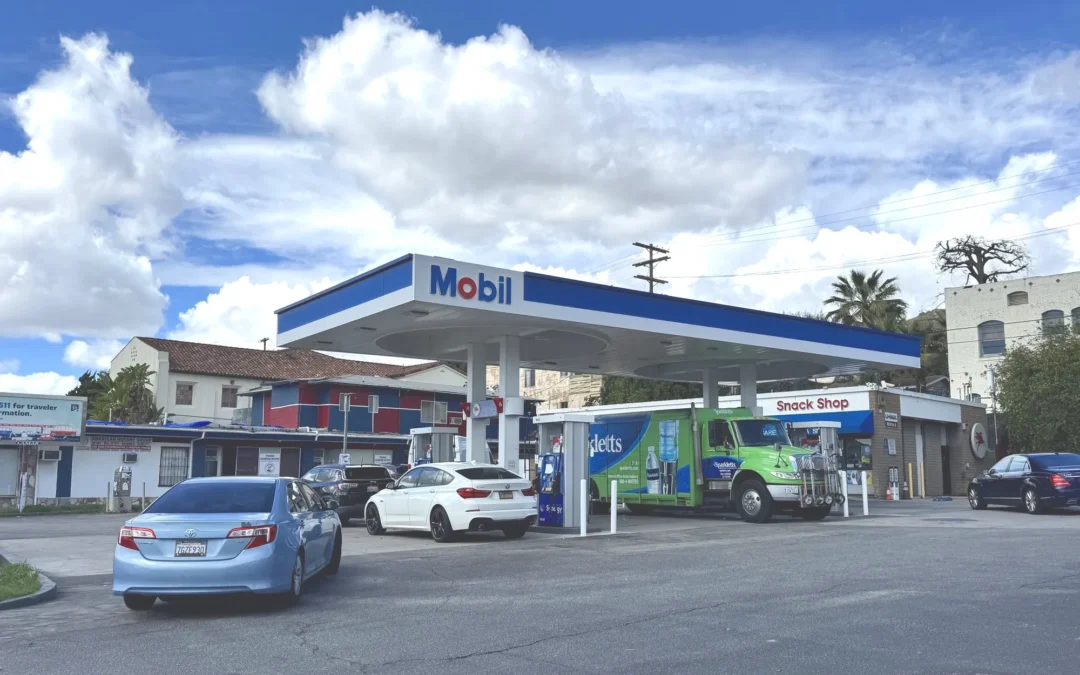
The 100% Opportunity: How to Leverage Bonus Depreciation for California Gas Station Investments in 2026

The 100% Opportunity: How to Leverage Bonus Depreciation for California Gas Station Investments in 2026

For high-net-worth investors and owner-operators in California, the search for a “tax shield” is a constant pursuit. California remains one of the most profitable but highest-taxed environments in the nation. To build real wealth in the retail petroleum sector, it is not enough to simply have high “inside sales” or a strong “pool margin”; you must understand the sophisticated tax strategies that allow you to keep more of what you earn.

As we move through 2026, one specific strategy has emerged as the “holy grail” of commercial real estate: gas station bonus depreciation 2026. Thanks to the legislative updates of the past year, the ability to front-load tax deductions on these essential businesses has reached a peak, offering savvy investors a way to achieve a near-immediate return on their capital.


Ready to shield your 2026 income?

The window for 100% bonus depreciation is a powerful but time-sensitive tool. Whether you are looking to acquire a new site or optimize your current portfolio, the first step is an accurate market perspective. Contact The Gas Broker Team today to explore qualifying Active Listings and schedule a confidential consultation on how tax-efficient acquisitions can redefine your net worth.


The Tax Power of the “Retail Motor Fuel Outlet”

Most commercial real estate—office buildings, traditional retail strips, and warehouses—is subject to a grueling 39-year depreciation schedule. This means you can only deduct a small fraction of the building’s value each year, providing a slow and steady tax benefit.

Gas stations, however, are unique. Under IRS guidelines, a property that qualifies as a “Retail Motor Fuel Outlet” (RMFO) is granted a much shorter 15-year recovery period. This classification is the foundation of the gas station tax advantage. Because the life of the asset is 15 years or less, it becomes eligible for “bonus depreciation” under Section 168(k).

The 2026 Update: Why 100% Matters

Following the One Big Beautiful Bill of 2025, the phase-out of bonus depreciation was halted and reinstated at the 100% level for 2026. This means that for qualifying assets placed in service this year, investors can deduct the entire cost of the 15-year property in a single tax year, rather than spreading it out over 15 or 39 years.

Do You Qualify? The Three-Pronged RMFO Test

To leverage gas station bonus depreciation 2026, your property must meet specific IRS criteria to be classified as an RMFO. Our consulting services often involve helping buyers analyze a site’s financials to ensure it meets at least one of the following tests:

  1. The Revenue Test: Does 50% or more of the gross revenues generated from the site come from the sale of petroleum products?
  2. The Floor Space Test: Is 50% or more of the total floor space of the building devoted to petroleum marketing sales?
  3. The Size Test: Is the building at the site 1,400 square feet or less?

If your property meets any one of these criteria, the building structure itself (not just the pumps and tanks) can be treated as 15-year property. This is a massive distinction. In a traditional C-store that doesn’t sell fuel, the building is 39-year property. In a gas station that meets the RMFO test, that same building is 15-year property—and thus eligible for 100% bonus depreciation.

The Math of a $4 Million Acquisition

To understand the impact of gas station bonus depreciation 2026, let’s look at a hypothetical purchase of a branded station in Riverside County.

Imagine you purchase a site for $4,000,000. Through a process called Cost Segregation, a specialized engineer and tax professional will break down that purchase price:

  • Land Value (Non-depreciable): $1,000,000
  • 15-Year Property (Building, Canopy, Tanks, Pumps): $2,500,000
  • 5-Year Property (POS Systems, Coolers, Interior Fixtures): $500,000

In a “normal” real estate deal, you would have very little to deduct in Year 1. But with 100% bonus depreciation, you can deduct the entire $3,000,000 ($2.5M + $500k) in the very first year.

If you are in a 37% federal tax bracket, that $3M deduction could result in a $1,110,000 reduction in your tax liability. Essentially, the government is “refunding” you over a million dollars of your purchase price through tax savings in the first twelve months. This is why gas stations have become a preferred vehicle for investors looking to offset large capital gains from other sectors.

The Role of Cost Segregation

The key to unlocking these benefits is a Cost Segregation Study. You cannot simply take the total purchase price and deduct it. You must have a professional study that “segregates” the personal property and land improvements from the land itself.

At The Gas Broker, we work closely with vetted vendors who specialize in these studies for the petroleum industry. We ensure that during your due diligence and escrow, you have the data necessary to support these aggressive tax positions. This is particularly important for “Business with Property” listings, where the allocation between the “Intangible Business Value” and the “Tangible Real Estate” must be handled with precision to satisfy both the IRS and your lender.

California-Specific Nuances: Land vs. Improvements

California’s high real estate prices create a unique challenge for gas station bonus depreciation 2026. Because land in coastal areas like Orange County or San Diego is so expensive, a larger portion of your purchase price is often allocated to the land (which cannot be depreciated).

However, the “improvement” values are also higher in California. Modern ARCO ampm or Chevron sites often feature massive 3,000+ square foot C-stores with high-end refrigeration, complex HVAC systems, and sophisticated fueling infrastructure. The “basis” for depreciation in these high-tier California sites is often significantly higher than in other states, allowing for larger absolute deductions even if the land-to-building ratio is tighter.

Strategic Interplay: SBA Financing and Tax Benefits

Many of our clients utilize the new SBA loan limits to acquire sites with only 10% down. This creates a powerful “leverage play.”

If you put 10% down on a $5M acquisition ($500,000 cash out of pocket), but your first-year tax savings from bonus depreciation are $1,000,000, you have essentially achieved a 200% return on your cash investment before you have even sold your first gallon of gas.

This synergy between the SBA 504 and 7(a) programs and current tax law is the primary reason why we have seen such aggressive competition for Active Gas Stations for Sale in 2026.

Beyond the First Year: Long-Term Wealth Building

While the Year 1 “pop” of 100% bonus depreciation is the headline-grabber, the long-term benefits are equally compelling. By using the tax savings to pay down principal or reinvest in site upgrades and redevelopment, you accelerate the compounding of your wealth.

Furthermore, if you decide to sell the station down the road, we help you navigate Depreciation Recapture. Strategic exit planning, such as utilizing a 1031 Exchange into a larger portfolio or a different asset class, can defer those taxes even further. Our Team, led by experts like Chandler J. Kelley, understands that a sale isn’t just about the “Gross Price”—it’s about the “Net Proceeds” after the tax man takes his cut.

Why Investors Trust The Gas Broker for Tax-Advantaged Deals

Valuing a gas station for tax purposes requires a level of industry-specific knowledge that generalist commercial brokers lack. We understand the difference between a “Type-21 Liquor License” (an intangible asset) and a “Walk-in Cooler” (5-year property). We know how to read a fuel supply contract to see if the equipment is owned by the dealer or the jobber—a distinction that can change your depreciation schedule by hundreds of thousands of dollars.

With over $250,000,000 in completed transactions, our firm provides the bridge between your CPA’s office and the hard corner of the real estate market. We help you identify “value-add” opportunities where a site might be underperforming operationally but offers a massive “tax-play” for a buyer with high outside income.

Conclusion: Don’t Leave Money on the Table in 2026

The combination of the RMFO 15-year class life and the 100% bonus depreciation provision makes 2026 the most tax-advantageous year for gas station buyers in recent memory. This is not just a “bonus”; it is a fundamental restructuring of your investment’s risk-reward profile.

However, these benefits are only available to those who move with precision. From ensuring the building meets the “Floor Space Test” to coordinating a Cost Segregation study during a 30-day due diligence period, every step requires specialized expertise.

Whether you are looking to acquire your first station or looking to divest your current portfolio to a “depreciation-hungry” buyer, the market intelligence we provide at The Gas Broker ensures you are making decisions based on data, not guesswork.


Is Your Current Portfolio Optimized for 2026?

Tax laws change, but the value of expert guidance remains constant. Whether you are buying to offset gains or selling to maximize a high-multiple market, we are here to execute. Contact Us Today for a Comprehensive Site Valuation and discover the true potential of your retail petroleum assets in today’s high-yield environment.


Disclaimer: The Gas Broker is a real estate brokerage firm. We do not provide formal tax or legal advice. We strongly recommend consulting with a qualified CPA or tax attorney to discuss your specific situation regarding IRS Section 168(k) and bonus depreciation.

Beyond the Pump: A Comprehensive Guide to Gas Station Valuation in the California Market

Beyond the Pump: A Comprehensive Guide to Gas Station Valuation in the California Market

Valuing a gas station in the Golden State is vastly different from valuing standard commercial real estate. In California, a gas station isn’t just a piece of land with a building; it is a complex, multi-layered business enterprise sitting on specialized real estate, governed by some of the strictest environmental and labor regulations in the country.

Whether you are a long-time owner-operator looking toward retirement or an investor seeking to expand your portfolio, understanding gas station valuation California is the foundation of a successful transaction. The market in 2026 is defined by high barriers to entry, shifting fuel brand loyalties, and the increasing importance of ancillary revenue streams like high-volume C-stores and Quick Service Restaurants (QSRs).

To navigate this landscape, you need to look beyond the fuel pumps and into the granular data that drives true market value.


What is your California gas station actually worth in today’s market?

Don’t rely on generic appraisals that treat your business like a standard retail shell. Our team has closed over $250M in specialized transactions and can provide the clarity you need. Contact The Gas Broker for a Confidential Site Valuation and take the first step toward a strategic exit.


The Three Pillars of Gas Station Valuation

When we conduct a site analysis and valuation, we break the asset down into three distinct components. A “match” between a buyer and seller in California usually hinges on how these three pillars are balanced.

1. Real Estate Value (The Fee Simple Interest)

In California’s dense urban markets like Los Angeles and Orange County, the underlying land value often provides a “floor” for the valuation. We look at the “highest and best use” of the property. Is the site on a hard corner with high traffic counts? Does it have the zoning potential for redevelopment? At The Gas Broker, we evaluate whether the property is being sold as “Fee Simple” (land and building included) or as a “Leasehold” interest (business only), as this drastically changes the cap rate and financing options available to buyers.

2. Business Enterprise Value (Goodwill and Operations)

This is the “income-producing” side of the equation. It includes the net operating income (NOI) generated from fuel sales, convenience store margins, car wash revenue, and any rental income from sub-tenants (like an auto repair bay or a taco stand). In the California market, the “multiples” applied to this income can vary wildly based on the strength of the brand and the length of the remaining fuel supply contract.

3. Environmental and Equipment Assets

The value of the equipment—specifically the Underground Storage Tanks (USTs)—is a major factor in California. With the state’s aggressive environmental oversight, having modern double-wall USTs and updated monitoring systems is a significant value-add. Conversely, older single-wall tanks can be a massive liability that requires a price adjustment to account for future removal and remediation costs.

Key Drivers of Value in the California Marketplace

To achieve an accurate gas station valuation California owners must look at specific regional “value drivers” that don’t apply in other states.

ABC License Types

The type of liquor license attached to a convenience store can add six figures to the valuation. A Type 21 (Off-Sale General) license, which allows for the sale of beer, wine, and distilled spirits, is highly coveted and often difficult to obtain in “over-concentrated” census tracts. Even a Type 20 (Beer and Wine) license is a baseline requirement for most modern C-store buyers in Riverside or San Diego County.

Fuel Brand and Supply Agreements

Is the station a “Major” (Chevron, Shell, ARCO, 76) or an “Independent”?

  • Branded Stations: Benefit from national advertising, robust credit card programs, and consumer trust, but often come with rigid “pumper” contracts that dictate margins.
  • Unbranded Stations: Offer higher margins and the flexibility to buy fuel from the lowest bidder, which is increasingly attractive in a volatile 2026 energy market.
  • The Consulting Services we provide often involve analyzing these supply contracts to see if a site is “encumbered” or “clear” for a new operator to rebrand.

The Rise of the “Super C-Store”

In California, fuel is often the “loss leader” used to drive foot traffic into the store. A station with 3,000+ square feet of retail space, high-end refrigeration, and a modern layout will command a much higher multiple than a “kiosk” style station. We look at the “Inside Sales” specifically, as these margins (typically 25-35%) are much more stable than “Outside” fuel margins.

Financial Metrics: Beyond the P&L

When you work with a specialized broker like Chandler J. Kelley, the valuation process moves into advanced financial modeling. We don’t just look at the bottom line; we look at:

  • Pool Margin: The average profit per gallon across all grades of fuel. In California, this can fluctuate based on localized “gas wars” or refinery disruptions.
  • EBITDA (Earnings Before Interest, Taxes, Depreciation, and Amortization): Most gas station businesses are valued on a multiple of EBITDA. For a high-performing California site, these multiples currently range from 3.5x to 6x, depending on the factors mentioned above.
  • Cap Rates: For the real estate portion, cap rates in California have remained compressed due to the high demand for “recession-proof” essential businesses.

The Environmental Factor: A California Reality

You cannot discuss gas station valuation California without addressing environmental compliance. The state’s State Water Resources Control Board (SWRCB) and local CUPA agencies have strict requirements for leak detection and tank testing.

During the due diligence and escrow process, a Phase I Environmental Site Assessment (ESA) is mandatory. If “anomalies” are found, a Phase II (soil borings) follows. A site with a “No Further Action” (NFA) letter from the state is the gold standard and will always fetch a premium price. If your site has ongoing remediation, the valuation must include a detailed “cost-to-closure” analysis to ensure the deal remains viable for both parties.

Why Regional Expertise Matters

A gas station in Merced County is valued differently than one in Dana Point.

  • Rural/Highway Sites: Value is driven by “Long-Haul” traffic, truck diesel volume, and the lack of immediate competition.
  • Urban/Infill Sites: Value is driven by “Neighborhood Loyalty,” high C-store “grab-and-go” sales, and the sheer scarcity of available land.

Our Team at The Gas Broker understands these nuances because we live and work in these markets. We understand the local traffic patterns, the competitive landscape of nearby “Big Box” retailers (like Costco or Sam’s Club), and the specific labor laws that affect your “Inside” profitability.

Preparing Your Station for a High-Value Sale

If your goal is to maximize your valuation, preparation should start 12-24 months before you hit the market.

  1. Clean Up the Books: Ensure every gallon and every candy bar is accounted for in a way that a lender can verify.
  2. Upgrade Equipment: Small investments in LED price signs, new POS systems, or EMV-compliant pumps can significantly reduce a buyer’s “post-close” capital expenditure and increase your asking price.
  3. Secure the Lease: If you are a leasehold owner, ensuring you have at least 15-20 years of options remaining is critical for a buyer to secure SBA financing.

The Gas Broker Advantage

Why choose a specialized petroleum broker over a general commercial real estate agent? The answer lies in execution.

Generalist brokers often struggle with the intricacies of ABC license transfers, franchise approvals (like ARCO ampm or 76), and environmental indemnifications. They may not know how to “re-cast” your financials to show the true owner-user benefit.

At The Gas Broker, we are recognized by CoStar as the #1 gas station brokerage for owner-user sales for three consecutive years (2023-2025). We have the relationships with the qualified buyers, the vetted vendors, and the specialized lenders who understand this asset class. Whether we are managing probate sales or helping a corporate operator divest a 20-site portfolio, our disciplined approach ensures that no money is left on the table.

Conclusion: Data-Driven Decisions for 2026

The California retail petroleum market is in a period of transformation. While electric vehicles and new energy regulations are on the horizon, the demand for well-located, high-volume gas stations and convenience stores remains at an all-time high.

A proper gas station valuation California is not a static number—it is a strategic narrative. It’s about telling the story of your site’s historical performance, its environmental integrity, and its future potential for growth. By focusing on the “Three Pillars” and leveraging the expertise of a team that has navigated hundreds of these complex deals, you ensure that your hard work results in the maximum possible return.


Ready to Move from “Operation” to “Exit”?

The first step to a successful sale is an accurate, market-grounded valuation. Don’t leave your legacy to chance with a generalist broker. Contact The Gas Broker Team Today for a strategic consultation. Let us show you how we use deep market intelligence to turn your petroleum assets into maximum revenue.


To stay updated on the latest California M&A trends, visit our Market Insights Blog or view our Current Active Listings to see what’s moving in your area.