
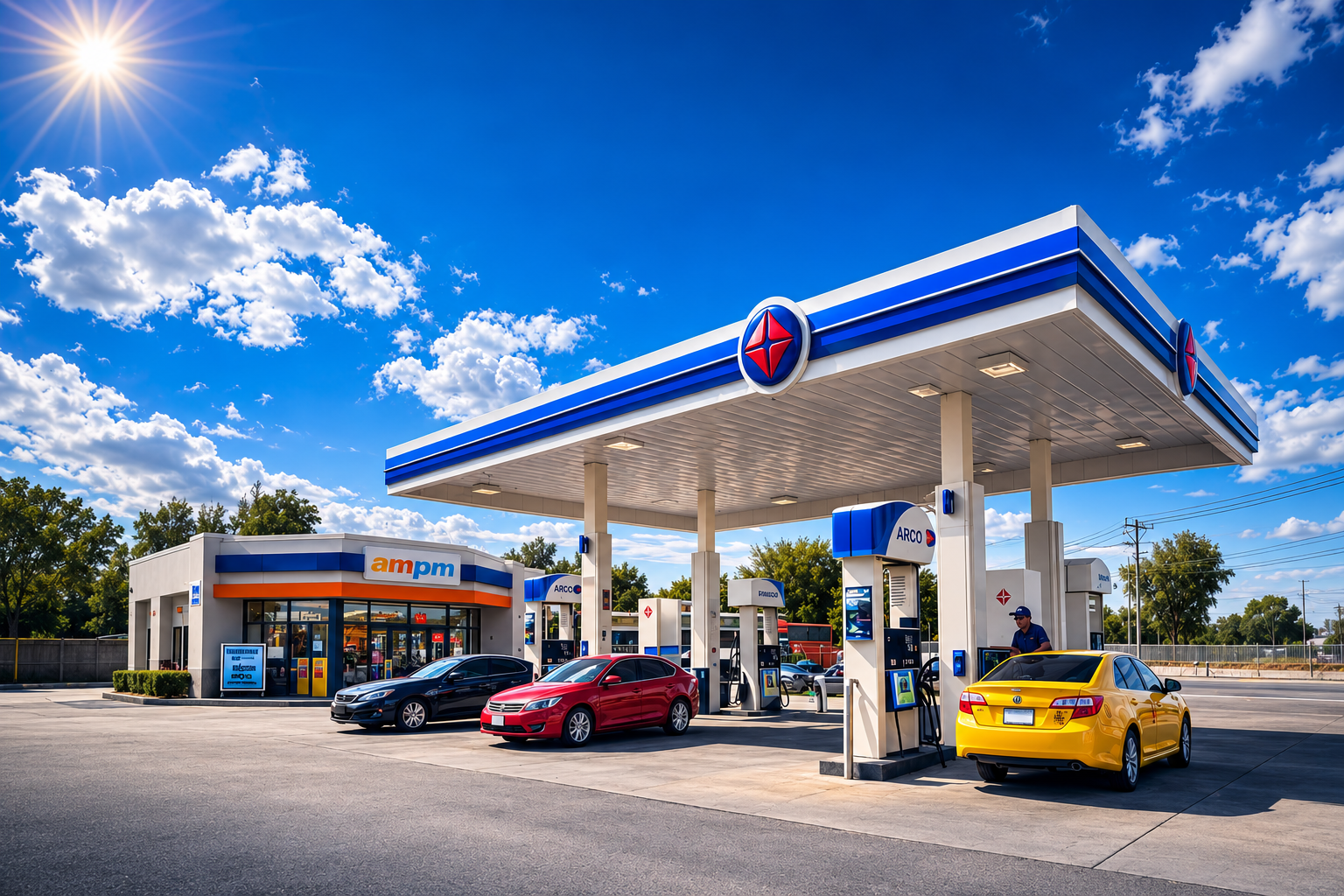
If you are an owner or investor in the retail petroleum sector, you already know that the Golden State presents a unique set of opportunities and challenges. Between fluctuating fuel margins, strict environmental regulations, and highly competitive real estate markets, operating a site here is not for the faint of heart. Eventually, whether you are planning for retirement, looking to trade up into a larger portfolio, or simply cashing out, you will face the ultimate question: How much is my business actually worth?
Understanding how to value a gas station in California is one of the most critical steps you will take as an owner. Pricing your asset correctly is the difference between a fast, profitable closing and a property that languishes on the market for months. Standard commercial real estate appraisals often fall short because they fail to account for the intricate, multi-layered revenue streams that a retail petroleum asset generates.
Need an Expert Opinion Now?
If you are considering selling your gas station, convenience store, or truck stop, do not leave your valuation to guesswork. The Gas Broker is California’s premier brokerage for owner-user gas station transactions. Explore our comprehensive Services or contact our team directly at (949) 874-3228 for a confidential, professional site valuation tailored to your specific asset.
To help you understand the true worth of your property, this guide breaks down the core financial metrics, valuation methods, and hidden California-specific factors used to price gas stations in today’s highly competitive market.
The Three-Headed Monster: Why Gas Station Valuations are Unique
Valuing a traditional retail storefront is relatively straightforward: you look at the lease rate, the square footage, and the cap rate. Valuing a gas station is much more complex because you are essentially valuing three distinct businesses operating on a single parcel of land:
- The Real Estate: The physical dirt and the improvements (canopy, tanks, building).
- The Fuel Operation: The volume of gas and diesel pumped (throughput) and the margin per gallon.
- The Inside Sales: The convenience store, car wash, quick-service restaurant (QSR), and lottery sales.
When learning how to value a gas station in California, you must analyze how these three profit centers interact.
Furthermore, you have to determine what is actually being sold. Are you selling the Business with Property (Fee Simple), or are you selling the Business Only while the operation sits on a long-term ground lease? If you browse our Active Listings, you will see that we successfully broker both types of transactions, but the valuation methodologies for each are distinctly different.
Core Valuation Methods Used in the Industry
Depending on the size of the operation and whether the buyer is an individual owner-operator or a large corporate consolidator, brokers and appraisers will use different financial models to determine the listing price.
1. Seller’s Discretionary Earnings (SDE)
For single-site, owner-operated gas stations, SDE is the gold standard of valuation. SDE represents the total financial benefit that a single full-time owner-operator would derive from the business.
To calculate SDE, you start with the business’s net profit (from the tax returns or profit and loss statement) and add back:
- The owner’s salary and payroll taxes.
- Non-cash expenses like depreciation and amortization.
- Interest expenses.
- Discretionary or one-time personal expenses run through the business (e.g., personal vehicles, travel, family cell phone plans).
Once the true SDE is calculated, a multiple is applied based on market conditions, location, and the lease terms. In California, business-only gas stations typically trade at a multiple of 2x to 4x their SDE, though highly profitable sites in prime locations can command more.
2. EBITDA Multiples
When dealing with absentee-owner stations, multi-unit portfolios, or corporate buyers, EBITDA (Earnings Before Interest, Taxes, Depreciation, and Amortization) becomes the preferred metric. Unlike SDE, EBITDA does not add back a manager’s salary, because it assumes the buyer will also need to pay a manager to run the day-to-day operations.
EBITDA multiples for gas stations in California fluctuate based on the inclusion of real estate.
- Business-Only (Leased): Often valued between 3x to 5x EBITDA.
- Business + Real Estate: Often valued between 8x to 11x EBITDA, depending on the underlying value of the commercial land.
3. Fuel Throughput and Cents-Per-Gallon (CPG)
While overall profit is the main driver, buyers also look closely at fuel volume. The “throughput” is the number of gallons a station pumps per month or year. A valuation might apply a specific dollar amount or cents-per-gallon (CPG) multiple to the fuel volume.
For example, an unbranded independent station pumping 150,000 gallons a month with a high pool margin will be valued differently than a branded station pumping 80,000 gallons a month with tighter, fixed margins. High volume proves the site has excellent ingress/egress and strong market demand.
Hidden Factors That Impact Your Valuation in California
Financial formulas are only the starting point. When our Team of experts—including Chandler J. Kelley, Sandi L. Hunter, and Shoeb Ikram—evaluates a site, we look at several operational and regulatory nuances that can drastically swing a property’s value.
1. Fuel Supply Agreements: Branded vs. Unbranded
Are you locked into a long-term fuel supply contract with a major brand like ARCO, Mobil, or 76? Or are you an independent, unbranded station?
- Unbranded Stations: Buyers often pay a premium for independent stations with no fuel supply agreements. This “free and clear” status gives the buyer the ultimate flexibility to negotiate their own fuel contracts, shop around for the best daily rack rates, or bring in a major brand of their choosing.
- Branded Stations: While branded stations benefit from national marketing and proprietary credit cards, long-term restrictive fuel contracts can sometimes limit the buyer pool. However, if the existing contract has excellent terms and high volume rebates, it can be a massive selling point.
2. Environmental Compliance and Equipment
You cannot figure out how to value a gas station in California without addressing environmental compliance. California has some of the strictest environmental regulations in the country, spearheaded by agencies like the California Air Resources Board (CARB) and local water boards.
Buyers will scrutinize your Underground Storage Tanks (USTs). If your station has older, single-wall tanks, the buyer will factor the massive cost of upgrading to double-wall USTs into their offer, reducing your net proceeds. Conversely, stations with recently upgraded double-wall fiberglass tanks, modern dispensers with EMV chip readers, and a clean Phase I/Phase II Environmental Site Assessment are highly desirable and command top dollar.
3. ABC Licenses (Beer, Wine, and Liquor)
Inside sales drive the bulk of a gas station’s net profit, and nothing boosts inside sales quite like an Alcoholic Beverage Control (ABC) license. Including a Type-20 (Beer & Wine) or Type-21 (Full Liquor) license in the sale significantly increases the valuation of the convenience store. Because California strictly limits the number of licenses available per census tract, these licenses are incredibly valuable assets on their own.
4. Location, Traffic, and Demographics
Real estate fundamentals never go out of style. A station situated on a hard, signalized corner with heavy daily traffic counts, easy freeway access, and multiple points of ingress/egress will always be valued higher than a mid-block station on a quiet street. Proximity to major retailers, strong local demographics, and the lack of direct competition across the street also play vital roles in the appraisal process.
How to Maximize Your Value Before Selling
If you are planning to sell in the next 12 to 24 months, there are proactive steps you can take right now to maximize your final valuation:
- Clean Up Your Financials: Buyers and their lenders require clean, verifiable data. Ensure your tax returns, P&L statements, and daily sales reports (Z-tapes) are accurate, organized, and up-to-date. Muddy financials lead to lower offers.
- Optimize Store Inventory: Clear out dead stock in the convenience store. Focus on high-margin items and ensure the store is brightly lit, well-merchandised, and clean. First impressions matter to buyers.
- Resolve Deferred Maintenance: Fix broken canopy lights, repair cracked asphalt, and ensure all fuel dispensers are in perfect working order. A property that looks well-maintained signals to a buyer that the underlying business is sound.
- Consult with a Specialist: The best way to increase value is to understand where you currently stand. A professional site analysis can uncover value-add opportunities—such as adding a quick-service restaurant (QSR) or optimizing your lease structure—that you may have overlooked.
Why You Need a Specialized Gas Station Broker
Selling a gas station is not a DIY project, nor is it a job for a generalist commercial real estate agent who usually sells office buildings or warehouses. The transaction requires navigating complex environmental due diligence, coordinating specialized financing, managing ABC license transfers, and vetting qualifies buyers for franchisor approvals, etc.
At The Gas Broker, we specialize exclusively in the mergers and acquisitions of gas stations, truck stops, and convenience stores. With over $350 million in completed transactions, our team brings the specialized M&A experience and pre-vetted buyer networks necessary to position your asset strategically. We know exactly how to highlight the strengths of your business and mitigate the weaknesses to ensure you receive the highest possible price.
Ready to Find Out What Your Station is Worth?
Understanding how to value a gas station in California requires deep market insight, disciplined financial analysis, and a thorough understanding of retail petroleum operations. Every station is unique, and online calculators or generic multiples simply cannot provide the accuracy you need to make a major financial decision.
Don’t leave your hard-earned equity on the table. If you are ready to explore a sale, or if you simply want a baseline understanding of your property’s current market value, we are here to help. Reach out to California’s premier retail petroleum brokerage today. Contact us at support@thegasbroker.com or call us at (949) 874-3228 to schedule a confidential, no-obligation consultation with our expert team. Let’s turn your asset into maximum returns.
0 Comments